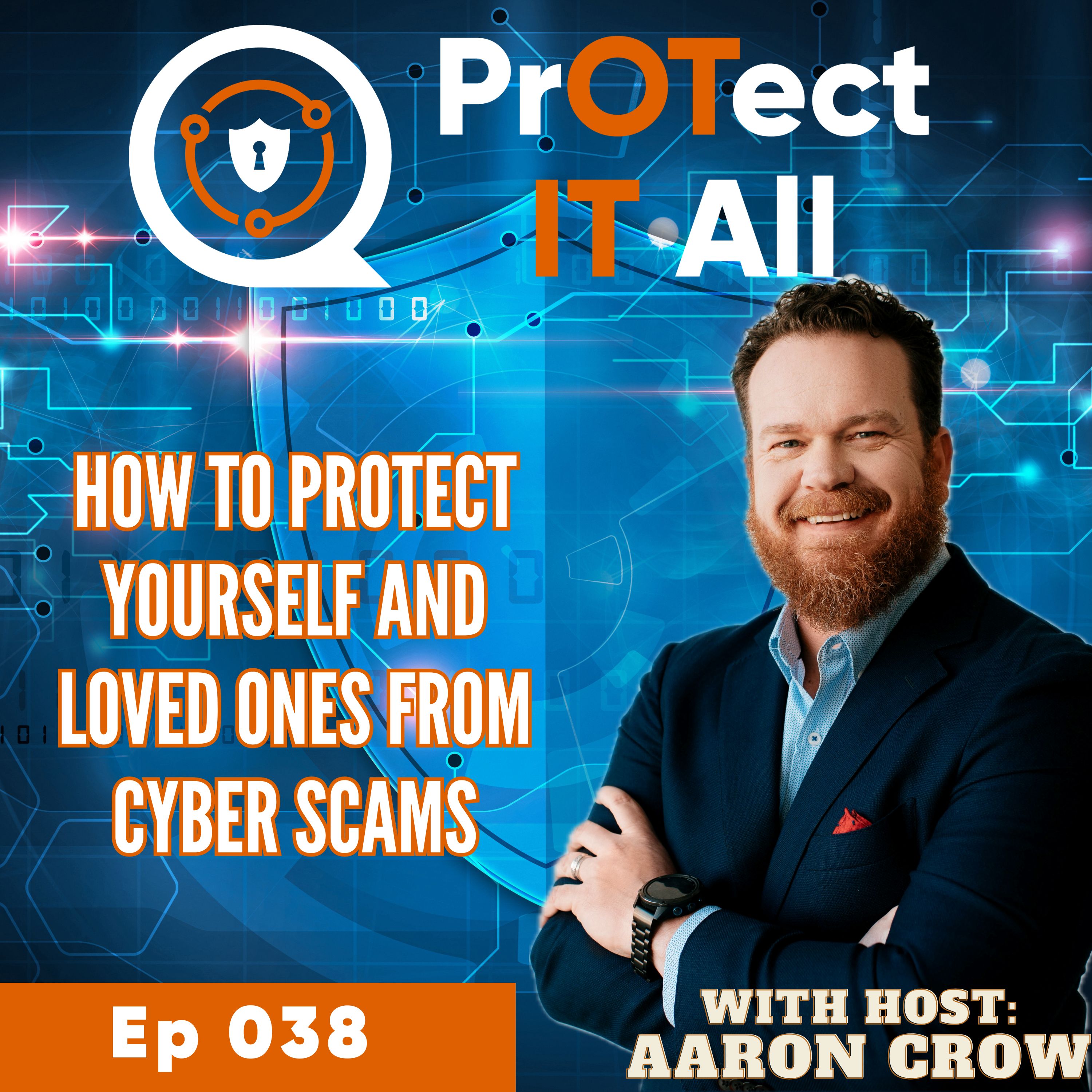
Episode 38
Solo
In this episode, host Aaron Crow delves into the increasingly sophisticated world of cyber scams that aim to steal money and identity. Discussing real-life examples, including a personal encounter with a jury duty scam over the holiday season, Aaron explores various types of frauds such as investment scams and tech support deceptions.
Listeners will gain actionable tips to safeguard themselves and their loved ones from these cyber threats. If staying ahead of cybercriminals and protecting personal information is a priority, this episode offers invaluable advice. Stay tuned for an essential discussion on cybersecurity.
Key Moments:
01:17 Nearly scammed; realized it was a hoax.
04:09 Threatened by scammers; no harm, but scary.
08:26 Verify the origin of the information; scams can be deceptive.
10:53 Invest only what you can afford to lose.
13:07 Verify uninvited officers via 911, file report.
19:51 Use physical backups, regularly update and backup files.
21:07 Use your router and a firewall.
Connect With Aaron Crow:
Learn more about PrOTect IT All:
To be a guest or suggest a guest/episode, please email us at [email protected]
Please leave us a review on Apple/Spotify Podcasts:
Apple - https://podcasts.apple.com/us/podcast/protect-it-all/id1727211124
Spotify - https://open.spotify.com/show/1Vvi0euj3rE8xObK0yvYi4
Aaron Crow (0:1.486): Hey everyone, welcome back to protected all podcast. I'm Eric Crow. Today we're to dive into critical topics, cyber scams, attacks, targeting your money and identity. These threats are everywhere. They're becoming more and more sophisticated by the day. I'm actually going to share some real life examples. Most recently, including a few that hit close to home. And if you, my point here today is to give you guys
Aaron Crow (0:30.860): some actionable tips to protect yourselves and your loved ones. So let's get started. Jury duty scam. Just got hit with this actually this week. I was on vacation or not vacation, but for Christmas went back to my, where, my family is and around Dallas and got a phone call Chris day before Christmas Eve. So the 23rd it was, I didn't, I don't ever answer phone calls that, that I don't know the numbers to and got a voicemail.
Aaron Crow (1:0.366): And it was, you know, with with the new iPhones, it does the voice to text. So, hey, this is so and so with with the county that I live in sheriff's department. Give me a call back as soon as you can call that person back. They're posing in law enforcement. They claim that I missed jury duty. Don't know if they actually know the public records because I had received jury duty back in June, I think it was.
Aaron Crow (1:27.282): But I had excused myself. think I was traveling. don't remember the details, but I had, you know, filled the form back. I didn't forget anything. But they claimed that I had not and that there had been a certified letter. Anyways, it was it was this whole ordeal. They wouldn't let you off the phone because if you know what they tell you is is I have to keep you on the phone. You have to go report to the sheriff's office to sign a bond.
Aaron Crow (1:53.900): They don't overload you with all of the information right up front. That would be too damning for their piece. Obviously that my Spidey senses were tingling the whole time. I even called him out on a couple of times. They called me, you know, when I told him it sounded like a scam, they called me from a number that was, you know, spoofing the actual county sheriff's office. So my wife actually called it from another phone line. Of course we couldn't get him on the phone.
Aaron Crow (2:24.054): that person. They did have a Texas Southern accent, so it wasn't like a, you know, a foreign accent that would have been a little bit more obvious. You know, but they say there's a warrant out for your arrest and that you, you know, you have to avoid jail time. And if you pay the fine immediately, like all of this stuff, they were going on again. I was fortunate that obviously I do this for a living. All my spotty senses were going up, but I got as far and
Aaron Crow (2:52.066): to be really clear, I got as far as to take money out of the bank and was gonna go to the police department and pay my fine. And then they said, well, you can't pay in person. You have to pay, you have to go to CVS and they'll give you a barcode and we'll send you four transactions. It was a $10,000 bond and they wanted $2,000 to pay to release it, but they were gonna refund you the same day.
Aaron Crow (3:21.422): And then again, they said that the CVS $500 each they would send me four barcodes, go to CVS and tell him I'm doing a bill pay. And that's when it was just like, yeah, I don't think so. I'm not doing that. If you want me to go to the sheriff's office, I'll go to the sheriff's. Oh, you can't do that. Well, I'm not doing this. I hung up on him. My wife had actually called the sheriff's department and asked him. The lady almost screamed through the phone. This is a fraud. Tell your husband not to do it. This is a fraud. This is a fraud. This is a fraud.
Aaron Crow (3:53.875): after that happened, super frustrating and, and, you know, we took money out. Luckily there was no harm, no foul. But after they found out or after they knew that I wasn't there, they actually called me later and then threatened me. actually threatened my wife, that they were going to come to my house and, you take actions. I don't really believe that's going to happen obviously, but still the point is, is, is there, there, there, there scary, they scare people. And again,
Aaron Crow (4:21.614): I do this for a living. So the fact that I got as far as to take money out of the bank. Now, obviously I wasn't going to send it to CVS, but they got me pretty far because they didn't just dump it on go pay CVS. If they did that from the beginning, I wouldn't have gotten as far. But, know, they were saying the right things when I, when I raised concerns, I talked about calling an attorney when I, you know, all these types of things, my wife called the only other line, you know, all these things, they had an answer for every question I had. Um, you know, so
Aaron Crow (4:51.798): the things to remember, you how to identify it as a scam. Law enforcement is never going to ask for payment. That was a spotty sense that came up again. They didn't ask for payment upfront. They just said I had to pay my bond, which is not uncommon, and you can't pay and they kept saying you can't pay with credit card. You have to use you know actual funds again. That's that's not wrong. If you if you pay a ticket, if you've ever had to do anything at the courts, they don't let you pay with credits like you can't buy a you know a lottery ticket with with credit.
Aaron Crow (5:22.370): You have to pay cash again, but I'm not you're not going to do it at a CVS if if law enforcement really wanted me they would have I would have gone to the court and done it the other thing is is that the law enforcement officer a sheriff is never going to take money ever in the United States It's just not what they do they they That's a whole different department. So when I called right after I hung up on the person my wife had called
Aaron Crow (5:49.774): one County I called the one that we actually lived in. They actually pulled my name up. So I've got gotten on the phone with the the clerk, which is the one that would actually take the money. And she pulled my name up and she said, yeah, I see that you had jury duty summons in June. She goes, but yeah, you sent the form back and you know, there's no warrant for your arrest and all that kind of stuff. So when it when it it sounds weird, you know, listen, stop, stop when unsure.
Aaron Crow (6:18.286): They're going to threaten. They're very good at what they do. They've got this script. You you can you can search jury jury duty scam, you know, Sheriff. You can see it on Reddit. There's 100 different places that have had posted about it. It is very, very it's going around right now. This was like I said two days before Christmas. So you know they were threatening that I was going to not be at home for Christmas and the you know the judge wouldn't get to me until you know two or three days after Christmas. So all the things that are like my gosh.
Aaron Crow (6:47.980): I don't want that go through your head. But I challenge you to just stop, think, breathe and call your local office. Like don't accept the phone call from them because they can, they can, they can spoof those numbers to be whatever they want them to be. Call your local sheriff, call your local, you know, county clerk or whatever, because more than likely it's not real. If it is real, again, if you miss jury duty,
Aaron Crow (7:17.762): They're not going to arrest you and send an officer out of the blue, right? You will have gotten a notice. You will have gotten official documentation and they're never gonna ask for money. That's not what they do. So hang up, report the scam. I actually reported it to my local sheriff's office as well as the Federal Trade Commission. There's a place where you can actually go put in that phone number.
Aaron Crow (7:45.422): Obviously with what I do for a living, I actually looked up the phone number. It's a spoof number. It's a voice over IP number that it's coming through. So wasn't able to actually find out who they are, but actually have some folks searching those as well. So that said,
Aaron Crow (8:7.020): Be careful. Be careful where you use your information. Be careful what information is out there. And again, I know a lot of these scams come through and they're foreign. They're foreign people and they speak with a funny accent and for a Texan at least. And you know, it kind of seems if they just said they were a sheriff and they had a, you know, an Indian accent or a Jamaican accent or, you know, Asian accent or something like that, it would have been a little bit. Yeah, I'm not sure about that, but.
Aaron Crow (8:34.432): Again, sound like a good old Texas boy. So it was a little more believable. Another one was that that's hit me personally, not personally, but my family. have an elderly family member who got caught in an investment scam. You know, they they lure you in with promises of high guaranteed returns. They they'll create professional websites with testimonials, stock stock prices. You know, after investing.
Aaron Crow (9:3.746): they saw returns in their online account, which made them invest more. And then they started losing. And then the scammer starts texting and saying, hey, you have to continue to put money in to get it back. So it's this ploy and now they're scared to not give it back because they keep promising next month you'll get it all back next month you get, but only if you continue to pay. So they're paying.
Aaron Crow (9:32.002): They emptied their retirements. They're sending every bit of money. They're not able to pay their bills all because they keep, they're so terrified that they've been scammed and that they're failing that they're unwilling to see that they've got caught up in a scam. And now it's impacting them. It's impacting their ability to live, right? So be wary of guaranteed returns. There are no guaranteed returns. Stocks.
Aaron Crow (9:59.434): investment portfolios, Bitcoin, crypto, like all investment carries some kind of risk. And go through legitimate platforms. You can look those things up. You know, if you're if you're unsure, ask friends, do a Google search on the website, you know, do a domain, you know, very simple tools you can use. And again, if it it seems too good to be true, you know, that was the thing my grandfather and my parents always used to tell me.
Aaron Crow (10:29.070): It seems too good to be true. It probably is. So start asking questions. research your investments thoroughly. And obviously with investing beyond just anything, like only invest money that you can, you can lose. and investment should just be that right is, is you shouldn't be putting money into things that you can't, you can't potentially lose. It's like going to, to Vegas, you know, you shouldn't be gambling more, you know, your mortgage. but that's, that's a whole nother episode that I don't want to get into.
Aaron Crow (10:59.488): Another one that that has hit me, family members is, you know, they got a tech support scam. They go to a website, they click a link or they get an email, they click a phishing thing, and then they get all these pop ups showing up on their computer that say, hey, you've got a virus. Call this number tech support for, for help. They call the number. Very nice person out there. if, yeah, we've seen this. Absolutely. Absolutely. I see it right now. Click this link. It'll give me remote access to your computer and I'll fix it for you.
Aaron Crow (11:29.784): So they do. And then what happens? They're logged into their banking and they log in and they transfer money. They install malware. They do all the things. This particular incident actually, they got access to their bank account. They took out quite a bit of money and transferred it out of the account. And it happens a lot. Real antivirus companies don't display pop-up warnings, ask you to call them.
Aaron Crow (11:58.198): Legitimate companies will never ask for remote access unless you initiated the call. All of these themes really come down to the one thing, right? They're starting it. The conversation meaning the call with with the jury duty. They initiated the call, right? They didn't send me a letter and me call the actual sheriff's office. They called me claiming to be the sheriff. I actually saw news yesterday that there's there's people dressing up in police uniform knocking on your door telling you to open the door.
Aaron Crow (12:27.320): They don't, they're not in patrol car. they don't actually have a real office, uniform, official uniform. and they're just claiming, come outside when you talk to you, you know what it's for. They don't know who you are. They don't know your name. They're not telling you their, their, their badge number. even if they do and you're not expecting them, call the police, call nine one one and say, Hey, I have people claiming to be officers at my front door. I don't know what they're for. They're.
Aaron Crow (12:56.834): they don't seem legit or I'm not sure if they're legit. Do you know if there's officers at my address right now and are they looking for me right or are they looking for someone right? So you have the power to make these conversations and call and ask when unsure stop when unsure ask these questions. Call a friend, you know, call you know your local police department. A lot of times the police like for instance in the jury duty one.
Aaron Crow (13:25.218): They have no jurisdiction. don't know where the people are, so they can't really necessarily do anything, but it's still good to file the the actual police report so that if something does come down, they can actually link it to how many times it's been done or attempted to be done. Social media and data breaches are another very common one with folks. One of my clients had some confidential information, proprietary, you know, things that they were, you know, their their.
Aaron Crow (13:54.094): personal information, not just information, but their product was released before it was actual ready to be released. And, you know, their social media accounts were taken over. Those breaches can lead to identity theft, reputation damage. I have another family member that their actual kid took over their Facebook and started posting a whole bunch of, you know, negative propaganda towards that family.
Aaron Crow (14:23.872): and the family member has not gotten access back to the Facebook account. Like all of these things are easy to prevent easy as relative. I'm doing air quotes here for you guys. Listen on, on, audio, but you know, use strong, unique passwords for every account manage, you know, through a password manager. I know I've said this a hundred times, but I'll continue to say it, enable dual factor authentication on all accounts, regularly monitor your accounts. Don't use the same password ever.
Aaron Crow (14:52.984): So no two places, you Facebook and Twitter and Instagram and LinkedIn and your, your bank and your email. And, know, it shouldn't be the same password. It shouldn't be easy to remember. Like you should have a password vault, a password manager, you know, with, you know, multifactor authentication. we have, there's all sorts of different types of trans people have one right here on me.
Aaron Crow (15:20.012): It's on my key ring. But you know, a YubiKey token, they're super cheap. They're super affordable. They have USB-C, they have USB-A, they have, you know, NFC and all these things. They'll work with your phone. What is that? It is a thing that you have. So multi-factor, it goes back to a password, something you know, and biometrics, your, your fingerprint, your facial recognition is something that you are. And then the second factor can be something that you have again, like a token.
Aaron Crow (15:50.284): That token is an encrypted unique thing that when you plug it in and hit the button, it gives you that thing, right? It's part of the encryption algorithm. And when you do that, in linking that with your password, yes, somebody can steal your password, but if they don't have that token, then they're not gonna be able to access that account. So same thing like you use your bank and it texts you or it emails you. That's the other problem with using
Aaron Crow (16:18.498): default multifactor in a lot of these times is like if you go to your bank many times the primary multifactor is your email and or your phone. The problem with that is if they get access to your email then they have access to everything. If they get access to your phone they get access to everything. So just be mindful of that. Protect yourself. know clean your information off the web. There are services out there that do this. You put in your phone number your email address your
Aaron Crow (16:48.332): data birth, that kind of thing, your mailing address, and they'll go out there and actually reduce the exposure on data brokers that have that information and kind of scrub those things out. I already mentioned password managers, LastPass, FirstPassword, KeyPass, know, there's numbers of those things. When you're online shopping, I highly recommend you not use your debit card. I know the Dave Ramsey folks out there will say, I don't have credit cards.
Aaron Crow (17:16.584): Even if you just get a credit card to do online shopping and you pay it off every month or as soon as you make a purchase, you pay that amount on your card. That's fine. The difference is, is with a credit card, you have that fraud prevention and protection and it doesn't come out of your actual account, which is different than if you use your debit card and they take money out. It's coming out of your checking account. Then you're fighting with your bank to get money put back in. Whereas when you go American Express or Visa or MasterCard,
Aaron Crow (17:45.090): That money never came out of your account. So when you dispute that charge, it's on them to fight it, but they're not having to refund you money. It's just a charge that's on your account and you just don't pay that right. It's complete. It's way easier to dispute those things when it's not actually coming out of your bank account. Anytime you're using public Wi-Fi, make sure you're using VPN. First of all, don't use public Wi-Fi if you can. If you absolutely have to make sure you do have a VPN of some kind.
Aaron Crow (18:14.318): There's a lot of really great ones out there that are not super expensive. It's really just protecting your environment, protecting your device and your information. Even if you are on a wifi, a public wifi, I don't recommend doing any public shopping, know, any online shopping, going to your bank, things like that. Those are just risky things to do on public wifi. Phishing awareness. Man, phishing emails are getting so much better. AI has made it so hard to
Aaron Crow (18:42.636): determined. You'll get emails that look legit and you really can't tell you if but really at end of the day, if you didn't expect an email from someone, it's probably fake. Reach out to them separately. Don't reply to that email. Send a direct email. So if you got an email from me and it says, hey, Bob, I'd love for you to send me this file or open this file. I just got it right. And I didn't call you or you weren't expecting an email from me.
Aaron Crow (19:10.326): Reach out and say, hey, did you send me this email? Is this attachment real? It's hard to see, it's hard to spot, it's hard to be perfect. Back up your data because eventually you may get hit. Make sure you have backups, your important files, your photos. Obviously now with cloud services, can back those things up to the cloud. But I also recommend having a physical device, USB drive, network attached storage, things like that on your network.
Aaron Crow (19:39.918): even if those things get bad. Because again, if somebody hacks into your iCloud account or your Dropbox and they delete all that stuff, it's gone and you don't have access to it. Whereas at least you want to have backups and tertiary backups of things, especially the super important things, photos that are unreplaceable, things like that. Obviously, if you got in a fire, same thing. You don't want to just have it on a USB because if your house burned down, you don't have that stuff. I've had laptops stolen in the past and there was
Aaron Crow (20:9.742): files on those laptops that only were there and I couldn't get access to them anymore. So, you know, regularly back up your files and then keep your software updated, patching, make sure you're updating your, your, you know, uh, devices as well. We're bringing so much IOT, um, internet of things. So you're all your devices are internet connected. Make sure you're updating those things as well. I've said this before, I had a whole episode on it. Um, you know, make sure that you're
Aaron Crow (20:38.504): segmenting your network. You keep your IOT devices separate than your guest network, separate than your primary network, separate than your kids network. Like you can get really detailed there. I also don't recommend using the wifi that are the router from your provider because they have access. They have a back door and it's not super secure. You know, you don't have to get super high end stuff, but I do recommend having a firewall between
Aaron Crow (21:4.865): the cable modem or DSL or whatever kind of router that you have directly from your provider, have it in between your environment and their hardware to protect from the inside. Scams and cyber attacks can happen to anyone. Again, I do this for a living and I got money out of the bank from that scam. I didn't actually send it. Fortunately, that would have been really frustrating, even more frustrating.
Aaron Crow (21:30.946): But it can happen to anyone. No one is immune to this. It can. They're really good at this. So stay vigilant. Take proactive measures. You can protect yourself and your loved ones. Have conversations with your kids. Have conversations with your parents and your grandparents. The elderly. I hear way too many in a lot of the stories I talked about today were elderly folks, right? But again, nobody's immune. If you've experienced a scam or have questions, reach out to me. Share your story. It could help someone and avoid being a victim.
Aaron Crow (22:0.654): Thanks for listening. Don't forget to subscribe. I'll see you next time. Stay safe out there and, you know, make sure that you're implementing these changes and protecting yourself and your loved ones. Thanks a lot, y'all.
Transcript lightly edited for readability.
Subscribe to PrOTect IT All and stay ahead of the threats targeting critical infrastructure.